Showing posts with label Nubia. Show all posts
Thursday, September 18, 2025
Amazon #1 (April, 1996)
There's a reductive tendency, and I'm guilty of this myself, to treat Amalgam Comics as simple combos. Thor + Orion = Thorion. And yes, there was some of that. Of the Amalgam Comics that I read, I figure Iron Lantern was the best at going through a list of shared concepts between DC and Marvel to create 50/50 splits all the way down the line. Pepper Ferris, Happy Kalmaku, Mandarinestro. Tick, tick, tick. However, there were quite a few people shaping this thing, with varied and sometimes conflicting approaches. For instance, and to the surprise of no one, John Byrne went his own way.
I was chagrined at the announcement of Byrne taking over Wonder Woman, and at this point was eight months into enduring a three year tour. Of all the books Byrne bailed on early, he just had to prove a point by staying on mine. He even managed to get an issue out in addition to Amazon, just one week apart. So lucky for me! While I liked Storm when I was an X-Men reader, I had unamiably separated from that fandom years earlier, and was rather unhappy with the mutant weather witch having beaten Princess Diana by popular vote in DC versus Marvel. I confess that my own store's tally was not a part of the count, because I didn't get around to mailing them in. Regardless of my efforts to lay a heavy thumb on the scale for the Amazing Amazon, Storm was still the in-store victor, and in fact I think all of my shop's voting aligned with the published winners. But anyway, I'm dealing with an X-Men creator lousing up a favorite book and character, the sour spot about the Storm victory, and now a book where Ororo usurps Diana in the role of Wonder Woman? Oh, joy. I was clearly not positively disposed toward this project, bought it for the run, read once, and filed away for nearly thirty years.
Reading it again from a much different place, it's easier to see it for what it is, which is an inter-company What If..? starring Storm. Yes, Ororo is in a Wonder Woman costume, that role being the central conceit of the tale, and there are even light overtures toward a more Amazonian take on Ororo Munroe. There's art and circumstances that associate her with Artemis of Bana-Mighdall, and Ororo's Amazon origin story lifts a key element from Donna Troy's post-Crisis "Who is Wonder Girl?" Still, regardless, this is a whole Ororo, not a combination with any other heroine, just playing out a different life trajectory. Instead of developing claustrophobia in childhood from being buried in a tunnel collapse that orphaned her, a toddler Ororo with fewer identifiers fears drowning after her parents are lost in a shipwreck. Instead of surviving through theft on the streets of Cairo, Ororo is rescued from the depths by Her Majesty Hippolyta, who raises Ororo as an adoptive daughter along with her child by divine creation, Diana. Always a rebel, and freed from our continuity's obligations to the matriarchy by an adoptive sibling eager to prove herself to their mother, Diana goes her own way while Ororo takes on the role of Wonder Woman.
An aside: While racial diversity wasn't a thing on Paradise Island before the 1970s, they have appropriately and legitimately been a "color-blind" society since the 1980s. In the Post-Crisis reboot, there were just always Amazons derived from the souls of women from across world culture. When Nubia was introduced, she was a secret second infant sculpted from clay by the Queen at the instruction of Greek Goddesses that was spirited away by their enemy Mars after being given life. When Nubia was rebooted, she was just a normal Amazon from an obscure and isolated tribe. After George Pérez created the African General Philippus as Hippolyta's military leader and most trusted council, there was a broadly accepted subtext (since made text?) within Wonder Woman fandom that they were also domestic partners. I had to pick this up from letter columns and such, because while there were moments of intimacy between Hippolyta and Philippus, I have never once detected any maternal relationship with Diana. The original conception of Nubia predated Philippus by fourteen years, with only a handful of appearances, and the heavily revised Nubia came nearly thirteen years after Philippus' introduction. It makes sense that there would be no further connection between Philippus and Nubia beyond their African ancestry. Amazon proposes that Ororo was raised in Hippolyta's household, but with no indication that Philippus played a role more substantial than the general "it takes a village" Themysciran vibe. I just find it extremely odd that in continuities where there are little to no children on Themyscira besides Diana, that Hippolyta would be the exclusive mother on that island to seemingly any other children that did turn up, with even her life partner uninvolved.
I haven't talked much about the story so far, but I feel a license to keep taking these tangents (but not Tangent™) because there isn't much to it. The narrative is non-linear, driven by constant flashbacks to different but relevant points in Ororo's history, plus a subplot moment to play into a non-existent ongoing shared universe element. If you set aside those conceits, it's a very simple tale. A Black male professor named Malcolm (eyeroll) located an ancient statuette while scuba diving in ruins uncovered by an earthquake. The statue was part of the treasury of Poseidon, who cursed Malcolm for "stealing" his property. Plagued by misfortune, Malcolm finally decided that he had to return the statuette to the seas where he found it. That also brought him back into the domain of Poseidon, who could directly punish Malcolm by sinking his ship, drowning hundreds of other people like the Munroes. Ororo as Wonder Woman is similarly accused by Poseidon and briefly held captive, but points out that the Greek Gods' pettiness and possessiveness had caused them to kill anyone that could have kept them relevant in modern times, thus winnowing away the power they once held through believers. It's the exact same resolution as Diana's first encounter with Ares in the initial arc of the Wonder Woman volume that Byrne had been working on.
The flashbacks help explore Ororo's altered history and contentious relationship with Diana, and the abortive "subplots" feature (underdeveloped, forgotten) characters that Byrne was using in his actual Wonder Woman run. I wasn't particularly moved one way or the other by either of my readings of this comic. It wasn't interested enough in Wonder Woman lore to explore the effects Amalgam could have had on it, instead rehashing simple origin elements. "Family History" was a disposable "imaginary story" where a Marvel character goes through the broad motions of a DC character's narrative. I noted that Byrne was still trying to add Image Comics touches to his art, particularly from Todd McFarlane's style, and that inker Terry Austin helped him in trying to reach that hyper-rendered state, while still falling far short of their more famous pairing (as well as Austin's work over Arthur Adams.) As I work to divest myself of comics that I don't need to possess unto my demise, this was an easy pitch into the discard pile.
Labels:
Elseworlds,
George Pérez,
Hippolyta,
Nubia,
Philippus,
Themyscira,
Wonder Woman
Monday, April 29, 2024
Wonder Woman Annual #8 (September, 1999)
Paul Kupperberg took over as editor on Wonder Woman with the same issue Mike Deodato, Junior had his first fill-in (there were another four before his run started.) I'm not sure if that was happenstance or design, but it marked the beginning of Wonder Woman finally being taken seriously as the third leg of the "DC Trinity." You'd think I would then have a positive view of his stewardship, but this also marked the point where the William Messner-Loebs run started to be taken out of his hands. With Deodato off to greener pastures, creative chores were passed on to John Byrne, for a Kanigher-indebted regressive trio of years. Not the most desirable of assignments, the book was claimed by Dark Horse writer Eric Luke. That lasted a couple of not fondly remembered years, despite showcasing early work by Yanick Paquette. Its main legacy was the start of Adam Hughes' long run as cover artist. Kupperberg's departure marked the passing of a poorly regarded period for the faithful, as other editors delivered unto them the much-flowered Phil Jimenez and Greg Rucka.
Maureen McTigue mostly inherited Kupperberg's decisions, though she did bring us Matthew Clark and a blip by Brian K. Vaughan. On the other hand, she gave Doselle Young three of the more painful Wonder Woman comics of the modern era. Through some bizarre magic, he then manage to score an Authority spin-off when it was still the most talked about book on the stands. Arguably, The Monarchy contributed to putting a stop to that (along with a tepid, timid relaunch of the main title, and similarly dire companion book in The Establishment. The end of the title was also the end of the career, which made more sense than the career itself, because Doselle Young just failed on comic book writing fundamentals, never mind personal taste.
Exhibit A, for "Ape," as in "JLApe: Gorilla Warfare," the very tongue-in-cheek final crossover featuring the "Magnificent Seven" JLA's world's greatest super-heroes in solo annuals, and the team book's as a collective. The one where they marked each chapter on the covers by dangling additional bananas off a bunch off the logo. Most of these books knew what they were, getting by on the novelty of seeing iconic characters in ape form, full of puns and lighthearted storytelling. This book is a very serious story, about very serious gorillas, tackling a very serious concern, with a very serious lack of craft.
I'm not going to beat myself up going beat for beat with this thing, in part because the story jumps around in chronology incompetently, and I'm not going going to work out the sequencing. The overview is that magic-wielding religious zealots from Gorilla City trespass deep into Tartarus via Themyscira in search of... the Rakshasas? As in Hinduism? But we're going to Greco-Roman Hades? And we're doing this by having the gorillas somehow detect and compromise the island of the Amazons beyond its mystical other-dimensional concealing barrier and holding the ferryman Charon hostage at conventional gunpoint? But most importantly, we're playing this 100% straight, even as a group of investigating Amazons follow their trail of banana peels? Lord, give me strength.
A poor choice of words, because the writer is apparently a noted public representative of atheism with a point to make. Despite all odds, even those calculated by key Gorilla City scientist Luk-Nutt who is part of the expedition, the apes transgress Doom's Doorway, activate a giant King Kong/Godzilla hybrid, and through the apparent simian sacrifice of one of their own unleash the malevolent Rakshasas. Along the way, Wonder Woman was joined by Artemis, simple enough, and Akila, the new incarnation of Shim'Tar, the great warrior mantle of the Amazons of Bana-Mighdall, who was apparently sent to Man's World for being to weak but was educated as an engineer at Oxford who merged her science with the Shim'Tar armor and apparently assumed that role under protest from herself and the Banas at the insistence of Hippolyta, and also she's the only Amazon that wears eyeglasses. I think? That's what I gathered from the sprinkled references throughout the story about this new character. Oh, and also, they bring Nubia back after twenty years since her last published appearance and another six as part of a continuity wiped out during Crisis on Infinite Earths. In a JLApe annual?!?
Deep breath. Nu'bia is an Amazon who like Wonder Woman earned through a contest the right to defend Doom's Doorway so long ago that she mistakes Diana for Antiope, but wasn't present any of the other times over millennia when threats to Doom's Doorway were shown in the comics, just since the Post-Crisis reboot. But now, the threat posed by the sorceress-priestess Abu-Gita and her gorilla charges is great enough to rouse her to duty. But also, she maybe lives underwater in the Styx and maybe can turn people to stone like Medusa (unclear) and this is all a side-mission to her because "she's on her way to rescue her ex-boyfriend Ahura-Mazda from his immortal enemy, Ahriman." Like, dude, that's a lot to scribble in the margins of your monkey people narrative. And as with Hinduism, there are (admittedly few) living adherents to the Zoroastrianism you're playing fast and loose with in a story about the lost loves of comic book Amazons. But again, an atheist with a message. Apparently, the belief of Abu-Gita and her charges in a Gorilla City religious faith that is revealed by Luk-Nutt's research to be a mishmash of ideas cribbed from human society was so strong as to warp reality itself to their shared delusion. At Luk-Nutt's insistence, Wonder Woman uses her Lasso of Truth on both Luk-Nutt and Abu-Gita to dispell the falsehood of gorilla religion for the objective reality of... immortal Amazons that worship the Greek Pantheon? So Young is as bad at atheist rhetoric as he is at all the other writing? And then Luk-Nutt chooses to take up with Charon's ferry service for unknown reasons and tenure? Also, somewhere in this, the JLA Annual happened that left Diana in gorilla form, but Luk-Nutt knew that her divine origins would inevitably reject the change, which happens after something happened to the Wonder Sphere that necessitated Wonder Girl fly Artemis to a skyscraper in New York City to fire an arrow at Wonder Ape that somehow prompts her reversion to human form? That was a whole tangent that had nothing to do with anything besides only having Diana be an unsexy ape for two pages, mostly in shadow. I told you that I wasn't going to untangle this thing, titled "The Thin Gold Line," because of the lasso part, I guess?
On paper, the art team of Brian Denham and Jon Sibal must have also seemed like a coup. Both had been at Image Comics' Exteme Studios since 1993-94, working with Alan Moore on 1995's Violator vs. Badrock. Denham was tapped to relaunch Antarctic Press' Warrior Nun Areala in 1997, and offered the his own contribution to the bad girl fad with 1998's American Woman. Jon Sibal was Rob Liefeld's inker on Captain America and Michael Turner's on Fathom. I don't know if it was deadline doom or a light paycheck, but their work his is maybe a career low. Most pages look unfinished, with many panels of rough layouts treated as finished, and a scandalous amount of silhouettes. The rushed nature of the work does an already poorly constructed story no favors. This is an ugly and embarrassing book in comparison to the other JLApe annuals, much less in their career and comics overall. Many of the artists working on these books are young, green, and didn't last in the field, but they clearly put in their best effort and many were quite good at drawing gorillas. Denham and Sibal are still in the industry to varying degrees a quarter century later, and their best work was yet to come, but here they failed to meet that minimum threshold. These are some sadly rendered simians.
JLApe: Gorilla Warfare
JLA Annual #3 @ The Idol-Head of Diabolu
Batman Annual #23 & Aquaman Annual #5 @ Justice League Detroit
Maureen McTigue mostly inherited Kupperberg's decisions, though she did bring us Matthew Clark and a blip by Brian K. Vaughan. On the other hand, she gave Doselle Young three of the more painful Wonder Woman comics of the modern era. Through some bizarre magic, he then manage to score an Authority spin-off when it was still the most talked about book on the stands. Arguably, The Monarchy contributed to putting a stop to that (along with a tepid, timid relaunch of the main title, and similarly dire companion book in The Establishment. The end of the title was also the end of the career, which made more sense than the career itself, because Doselle Young just failed on comic book writing fundamentals, never mind personal taste.
Exhibit A, for "Ape," as in "JLApe: Gorilla Warfare," the very tongue-in-cheek final crossover featuring the "Magnificent Seven" JLA's world's greatest super-heroes in solo annuals, and the team book's as a collective. The one where they marked each chapter on the covers by dangling additional bananas off a bunch off the logo. Most of these books knew what they were, getting by on the novelty of seeing iconic characters in ape form, full of puns and lighthearted storytelling. This book is a very serious story, about very serious gorillas, tackling a very serious concern, with a very serious lack of craft.
I'm not going to beat myself up going beat for beat with this thing, in part because the story jumps around in chronology incompetently, and I'm not going going to work out the sequencing. The overview is that magic-wielding religious zealots from Gorilla City trespass deep into Tartarus via Themyscira in search of... the Rakshasas? As in Hinduism? But we're going to Greco-Roman Hades? And we're doing this by having the gorillas somehow detect and compromise the island of the Amazons beyond its mystical other-dimensional concealing barrier and holding the ferryman Charon hostage at conventional gunpoint? But most importantly, we're playing this 100% straight, even as a group of investigating Amazons follow their trail of banana peels? Lord, give me strength.
A poor choice of words, because the writer is apparently a noted public representative of atheism with a point to make. Despite all odds, even those calculated by key Gorilla City scientist Luk-Nutt who is part of the expedition, the apes transgress Doom's Doorway, activate a giant King Kong/Godzilla hybrid, and through the apparent simian sacrifice of one of their own unleash the malevolent Rakshasas. Along the way, Wonder Woman was joined by Artemis, simple enough, and Akila, the new incarnation of Shim'Tar, the great warrior mantle of the Amazons of Bana-Mighdall, who was apparently sent to Man's World for being to weak but was educated as an engineer at Oxford who merged her science with the Shim'Tar armor and apparently assumed that role under protest from herself and the Banas at the insistence of Hippolyta, and also she's the only Amazon that wears eyeglasses. I think? That's what I gathered from the sprinkled references throughout the story about this new character. Oh, and also, they bring Nubia back after twenty years since her last published appearance and another six as part of a continuity wiped out during Crisis on Infinite Earths. In a JLApe annual?!?
Deep breath. Nu'bia is an Amazon who like Wonder Woman earned through a contest the right to defend Doom's Doorway so long ago that she mistakes Diana for Antiope, but wasn't present any of the other times over millennia when threats to Doom's Doorway were shown in the comics, just since the Post-Crisis reboot. But now, the threat posed by the sorceress-priestess Abu-Gita and her gorilla charges is great enough to rouse her to duty. But also, she maybe lives underwater in the Styx and maybe can turn people to stone like Medusa (unclear) and this is all a side-mission to her because "she's on her way to rescue her ex-boyfriend Ahura-Mazda from his immortal enemy, Ahriman." Like, dude, that's a lot to scribble in the margins of your monkey people narrative. And as with Hinduism, there are (admittedly few) living adherents to the Zoroastrianism you're playing fast and loose with in a story about the lost loves of comic book Amazons. But again, an atheist with a message. Apparently, the belief of Abu-Gita and her charges in a Gorilla City religious faith that is revealed by Luk-Nutt's research to be a mishmash of ideas cribbed from human society was so strong as to warp reality itself to their shared delusion. At Luk-Nutt's insistence, Wonder Woman uses her Lasso of Truth on both Luk-Nutt and Abu-Gita to dispell the falsehood of gorilla religion for the objective reality of... immortal Amazons that worship the Greek Pantheon? So Young is as bad at atheist rhetoric as he is at all the other writing? And then Luk-Nutt chooses to take up with Charon's ferry service for unknown reasons and tenure? Also, somewhere in this, the JLA Annual happened that left Diana in gorilla form, but Luk-Nutt knew that her divine origins would inevitably reject the change, which happens after something happened to the Wonder Sphere that necessitated Wonder Girl fly Artemis to a skyscraper in New York City to fire an arrow at Wonder Ape that somehow prompts her reversion to human form? That was a whole tangent that had nothing to do with anything besides only having Diana be an unsexy ape for two pages, mostly in shadow. I told you that I wasn't going to untangle this thing, titled "The Thin Gold Line," because of the lasso part, I guess?
On paper, the art team of Brian Denham and Jon Sibal must have also seemed like a coup. Both had been at Image Comics' Exteme Studios since 1993-94, working with Alan Moore on 1995's Violator vs. Badrock. Denham was tapped to relaunch Antarctic Press' Warrior Nun Areala in 1997, and offered the his own contribution to the bad girl fad with 1998's American Woman. Jon Sibal was Rob Liefeld's inker on Captain America and Michael Turner's on Fathom. I don't know if it was deadline doom or a light paycheck, but their work his is maybe a career low. Most pages look unfinished, with many panels of rough layouts treated as finished, and a scandalous amount of silhouettes. The rushed nature of the work does an already poorly constructed story no favors. This is an ugly and embarrassing book in comparison to the other JLApe annuals, much less in their career and comics overall. Many of the artists working on these books are young, green, and didn't last in the field, but they clearly put in their best effort and many were quite good at drawing gorillas. Denham and Sibal are still in the industry to varying degrees a quarter century later, and their best work was yet to come, but here they failed to meet that minimum threshold. These are some sadly rendered simians.
JLApe: Gorilla Warfare
Labels:
Artemis,
Cassie Sandsmark,
Iron Age,
JLA,
Nubia,
Wonder Woman
Wednesday, April 3, 2024
DCOCD Podcast Episode 60- Trial of the Amazons
It's been about 1½ years since I've done anything with Wonder Woman blogging, and a smidge longer since I last podcast about her, so this month should mark a substantial uptick in Amazing Amazon output. First up, I was recently a guest on Flanger's DCOCD Podcat, alongside Tom Panarese of Pop Culture Affidavit. On DCOCD, "your favourite Australian podcast hosts will discuss a DC Comics Event, as they occur in chronological order..." This is actually my second Themysciran discussion on the show, as Dr. Anj of Supergirl Comic Box Commentary once pulled together an emergency episode when Flanger was briefly stranded in the United States. It just speaks to my neglect that I never got out a post about DCOCD Podcast Episode 11- WONDER WOMAN: THE CONTEST. So hey, if you missed it in 2018, that's two new shows for you! I'm unusually kind toward "The Contest,"* and exceptionally cruel toward "Trial of the Amazons," so consider this your due warning... You can listen to DCOCD 60 HERE!
* It's still the 11th ranked DC event on their ladder. "Trial of the Amazons" is... not.
Labels:
Artemis,
Cassie Sandsmark,
Donna Troy,
Hippolyta,
Nubia,
Wonder Woman,
Wonder Woman Podcast,
Yara Flor
Monday, August 1, 2022
Wonder Woman Giant 2020
Episode #22
Look for us on iTunes, Anchor or the Internet Archive, where you can also directly download an art-tagged MP3.
Not quite two years later, Frank returns with special guest Jeffrey Brown (They/Them), who has also been waiting a couple years to hear this audio. A lengthy, roaming conversation on all things Amazing Amazon, including omnibuses, animation, and action figures.
We don't have a Magic Sphere, so if you want to communicate with us about the podcast...
- Tweet host Diabolu Frank directly, or commune with @rolledspine as a group. You can also #WonderWomanPodcast.
- Email Diabolu
- If the main Diana Prince as the New Wonder Woman blog isn't your thing, try the umbrella Rolled Spine Podcasts.
Monday, February 6, 2017
Podcast: The Mystery of Nubia
Episode #10
Look for us on iTunes, ShoutEngine or the Internet Archive, where you can also directly download an art-tagged MP3.
By all indications, 2017 needs a podcast dedicated to Queen Hippolyta's "second," "other," "dark" daughter who debuted on November 7, 1972 in Wonder Woman #204, so we're "Introducing Nubia!" The soul sister of the Amazing Amazon went on to appearances in Wonder Woman #205-206, including a solo back-up story, plus cameos in Supergirl #9 and The Super Friends #25 before vanishing from comics entirely for twenty years (and actually closer to a quarter century if you discount a single page of one of those comics.) Despite barely escaping 1973 in comics, Nubia managed to make appearances on television and in toy form when that was an extremely rare accomplishment, and her origin has a massive impact on Wonder Woman's own. Nubia was a contender, and we argue that she still matters 45 years later on this episode!Nubia is one of the least heralded but most valuable creations of Robert Kanigher, and possibly his single most important contribution across twenty years as a writer/editor of the Amazing Amazon (depending on how much credit you extend him on Wonder Girl.) The world is still waiting for Nubia to be fully embraced as a key component of Amazonian lore! For more on Nubia, check out my 2012 article on her, newly revised with fresh scans to replace the busted embeds Comicvine left me with.
We don't have a Magic Sphere, so if you want to communicate with us about the podcast...
- Tweet host Diabolu Frank directly, or commune with @rolledspine as a group.
- Email Diabolu
- If the main Diana Prince as the New Wonder Woman blog isn't your thing, try the umbrella Rolled Spine Podcasts.
Wednesday, November 14, 2012
All The World Is Waiting For Nubia!
After several years as a de-powered urban adventurer in contemporary fashions, Diana Prince went back to being Princess Diana of Paradise Island in 1973. As part of the issue celebrating the rebirth of the costumed heroine Wonder Woman, a new character of seemingly great import was introduced. An armored warrior who appeared to be Diana's equal or better (taking into account that the Amazing Amazon was probably a bit rusty at super-battles) laid claim to the title of Wonder Woman.
Wonder Woman and her challenger began a contest at Paradise Island Stadium involving grabbing charging bulls by the horns and a sword fight in which the pair were tethered by their non-dominant wrists (the plaintiff was left-handed.) Diana was on her back and threatened with a deathblow, but her opponent hesitated, allowing Wonder Woman to deflect her sword and force a draw. Queen Hippolyta then bade the stranger remove her helmet to reveal herself. "I am Nubia! Wonder Woman of the Floating Island!"
It was soon revealed in a spectacularly blatant retcon that this was Nubia, Diana's literal soul sister sculpted from dark clay at the same time as Diana at the command of the goddess Aphrodite ("Afrodite?") Nubia was blessed by the goddesses as Diana was, and meant to be raised as her twin, until she was kidnapped in infancy by the war god Mars. Nubia was then raised to become Diana's adversary, and usurp her role as the champion of the Amazons.
"The Mystery of Nubia" was a five page solo back-up strip in the following issue that revealed the Floating Island seemed to be populated almost entirely by African tribesmen with spears and shields living in thatch huts. They dressed nearly identically, and engaged in mortal combat under Mars' law for the right to become Princess Nubia's mate. This Wonder Woman wished to be no man's possession, so when Goolah lost his match, Nubia fought the near-victor Kenyah for her own liberty. The match ended with Nubia's sword jammed into the ground inches from Kenyah's face. "A woman doesn't destroy life-- she cherishes it! She never forgets that once a life has been taken-- it can never return! Until men turn from war to peace-- and violence to love-- they will always remain in a murderous jungle!" Nubia then returned to her hut to cry in a "bottomless sea of loneliness."
In her final major appearance in her original incarnation, Nubia's full origin was revealed. The Floating Island was actually Mars' Slaughter Island, a mobile base with a volcano that could fire molten rock like cannonballs, which targeted Paradise Island. Princess Diana soon arrived to plug it up, but she was then tricked by the island's seeming ability to conjure illusions. Diana was set upon by a whole band of the island's warriors, who were defeated in short order. However, she was struck from behind by Nubia, and the two women began a protracted battle.
Diana recognized a ring Nubia wore from an experience in her youth that associated the jewelry with Mars. Wonder Woman flew her adversary high enough in the sky that reflected beams from the sun caused the ring to expand and fall off Nubia's finger. Despite being raised from birth to be Mars' instrument of vengeance against the Amazons, Nubia could only be fully controlled through the power of the ring, and immediately turned on her former master. Mars tried to ward the heroines off with an illusory monster, but was ultimately framed as a coward too terrified to attack the Amazons directly, and abandoned his assault now that he no longer had Nubia to do his dirty work.
Clearly, Nubia should have either become one of the great Wonder Woman foes, or her staunchest ally. You have to remember, when Wonder Girl was created, she was supposed to be Diana as a teenager. A mistake led to her joining the Teen Titans, and developing into an entirely separate being named Donna Troy. Wonder Girl was treated as a Titans character first, and was very much extant for most of her shared history with Wonder Woman. Steve Trevor was dead, Etta Candy forgotten, and there wasn't much in the way of prominent Amazons. Even if there had been, Diana Prince's sole companion for years was I-Ching, who was killed off in the very issue introducing Nubia. Beyond Queen Hippolyte, Wonder Woman was starting off with a blank slate in the supporting cast department.
Further, Wonder Woman hadn't dealt with her better known rogues in years, many were quite dated by the '70s, and they'd have to be reintroduced to readers. Meanwhile, Nubia had just appeared on a pair of fantastic, memorably covers and a story of some magnitude. By 1975, Nubia was set to be played by Teresa Graves, the first African-American actress to star in an hour long drama in the U.S., on the hit Wonder Woman television show. Nubia was introduced as "Wonder Woman's super-foe" as part of Mego's line of tie-in dolls, and the only opponent created for that set. She was the only "African" DC character to appear in the well-loved Mego line, and was only joined by The Falcon if you count the entire Marvel line, as well. Friend or enemy, Nubia was all set to be a big deal and a lasting addition to the Amazing Amazon's lore.
Or not. The Nubia character was dropped from the TV show before she was ever introduced after it made a switch in network and time period. The closest she ever came to television was commercials for the toys. The comic book character had a tainted origin where she was raised on an island of stereotypical tribesman, then had to defend her chastity and right to self-determination at sword point. Nubia was terribly lonely, and only fought Wonder Woman because of some evil spell instead of her own intentions. When Nubia appeared in a Supergirl story late in the year of her debut, she was depicted as Hipployta's "other" daughter who was incapable of protecting her long lost mother from radioactive sea mutants before falling victim to their poisonous bite. While Nubia convalesced, Hippolyta made a big show of adopting their mutual savior Supergirl as her (latest) new daughter. Nubia was dying, and in the absence of Wonder Woman (who was out of contact on a mission,) it was up to Supergirl to save her life a second time. Nubia spends most of the story laid up and entirely dependent on the kindness of blonde white women.
Six years later, when she was gifted a one page cameo in a Super Friends comic, she was made the leader of an African village. Why? She was raised by a Greek god on a traveling island. Oh wait, she's "Nubia," so she's off to Africa then. There, she fought a Wonder Woman driven temporarily power-mad by a villain, but the outcome of their fight was never revealed, and Nubia wasn't so much as mentioned again for two decades. Where was her grieving mother? Her welcoming sister? How does a warrior who could fight Wonder Woman to a standstill and had her own doll be allowed to be forgotten so swiftly and completely?
When Nubia finally was plucked from the deepest depths of obscurity, it was as part of a series of annuals called "JLApe" where the Justice League fought Grodd and his Gorilla City minions to reverse their becoming apes. No weird racial overtones there. Bypassing the obvious pun of rebranding her "Negress," the Post-Crisis "Nu'Bia" passed through a formidable egress into the bowels of Themyscira to defend Doom's Doorway from the inside. So wait, the negra Amazon is locked up in the cellar for centuries, essentially enduring hell while committing no crime, and only pokes her head out to fight monkeys? Merciful Minerva! A follow-up two-parter drawn by probably the least suitable artist for a Wonder Woman comic ever (the vulgar Irish comedian John McCrea) tied Nu'Bia into Zoroastrianism and saw her devote her life to resurrecting her godly boyfriend Ahura Mazda. This of course happened only after Joe Linsner had popularized Zoroastrianism (such as could be expected) through his Dawn series, so the premise was both derivative and a blow to feminism. As an added bonus, it was the brainchild of African-American writer Doselle Young, best known for alienating The Authority readers with his funky attempted spin-off The Monarchy alongside McCrea. I can't recall which came first, but nobody much dug either.
How did Nubia go from being the great character find of 1973 to a cautionary tale? Being published by DC Comics in the 1970s couldn't have helped, where Black Lightning couldn't survive a year when Luke Cage made it a decade, and The Vixen never got published at all (to this day!) Nubia's creators made a mess out of her origin and motivations coming out of the gate, and allowed her to immediately stall out. It's a shame, because Nubia had such potential to be the Wonder Woman for people of color, arriving just a year after Green Lantern John Stewart (and long before he was making regular appearances.) The Vixen hadn't even been created for her aborted pilot issue, so Nubia is arguably DC's first "African" heroine, not that you'd know it from her absence of stature.
Wonder Woman is a character that comes with a lot of baggage and forced regulations, where Nubia offers the opportunity to write a Wonder Woman with much greater freedom to experiment. Nubia could have been a sweet aspirational character, and in a world where Beyoncé Knowles was a serious contender to play Princess Diana in a movie, the character still has an audience in the waiting. Given how distastefully Diana has been handled in recent years, I'd vastly prefer some Nubia myself, either by taking up the sword chopping so that Diana could get back to her magic lasso or by assuming the role of peaceful ambassador that extreme portrayals have forced Diana to abandon. In the 21st Century, in order to reflect a black female audience hungry for heroism in swiftly expanding media platforms, DC Comics needs Nubia now more than ever.
Post-Racial DC Comics?- Vibe and the Justice League of the New America @ Justice League Detroit
- Victor Stone: Affirmative Action Cyborg @ DC Bloodlines
- The Atom: Big Little Man @ Power of the Atom
- Race & Mars @ The Idol-Head of Diabolu
Friday, September 14, 2012
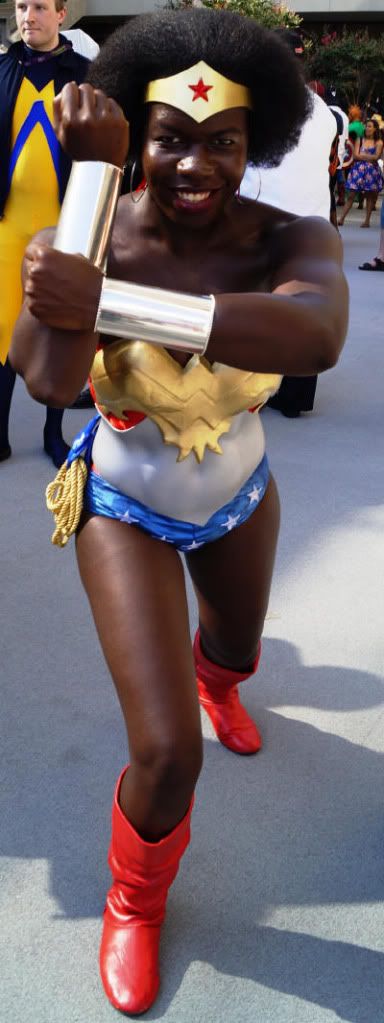
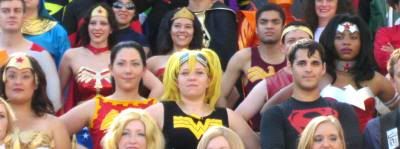
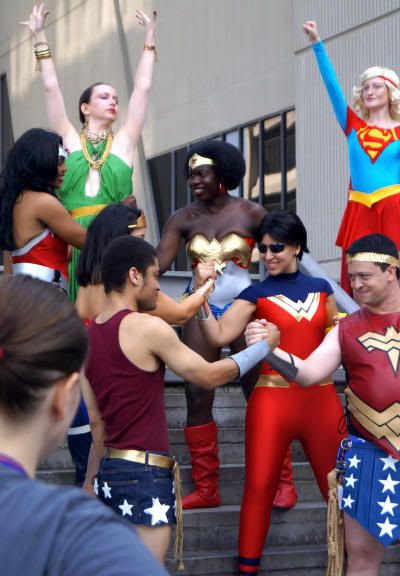
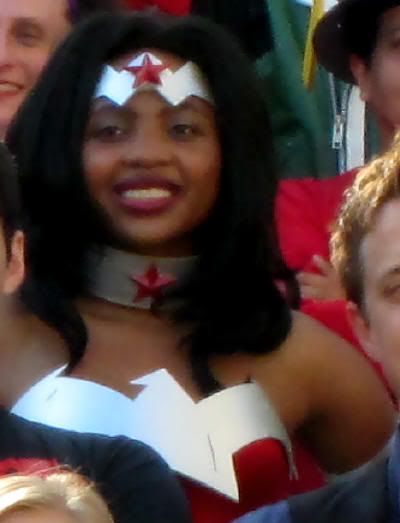
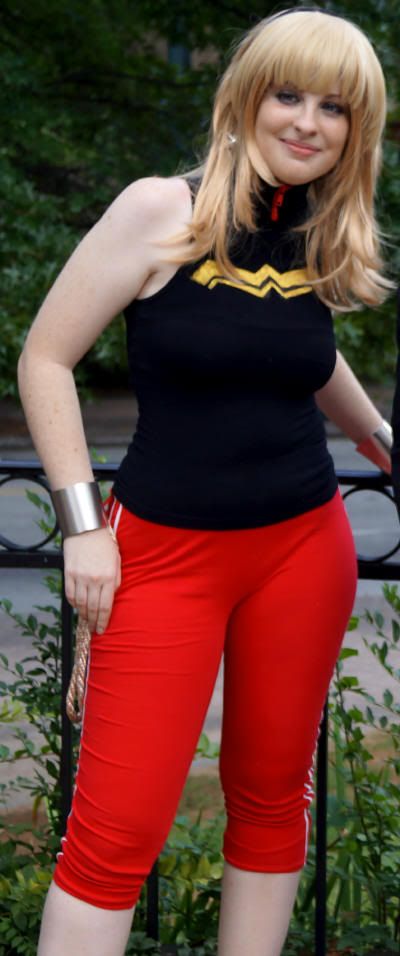
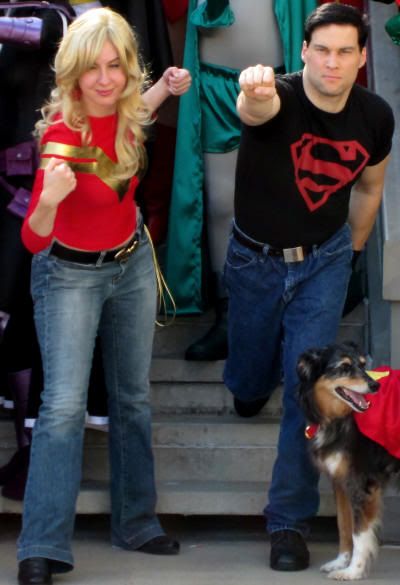
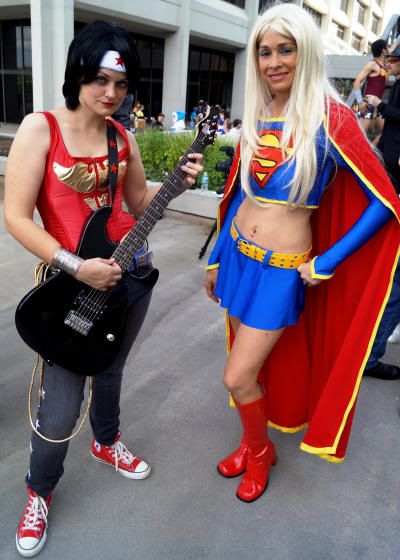
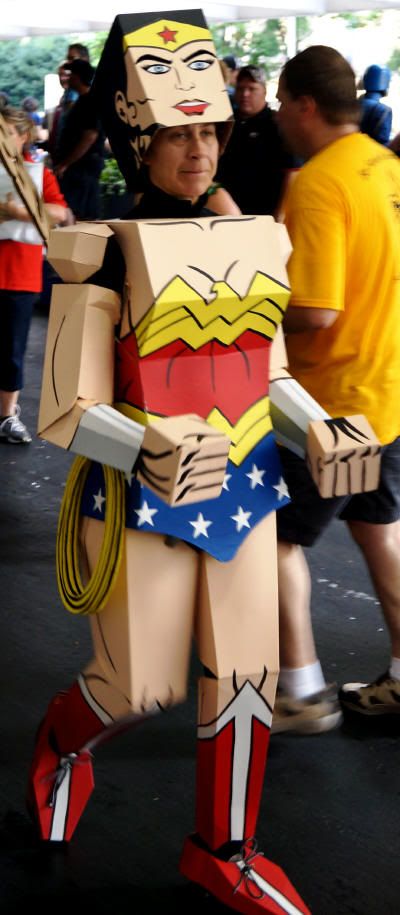
Dragon*Con 2012 Wonder Woman Cosplay Gallery by Shag Matthews
Click To Enlarge & Expand

Two other good full shots are here and here.


Thanks to the Irredeemable Shag for sharing his hundreds of pictures, and the Superhero Costuming Forum for arranging the shoot.
Dragon*Con 2012 Cosplay Galleries by Shag Matthews

Two other good full shots are here and here.


Thanks to the Irredeemable Shag for sharing his hundreds of pictures, and the Superhero Costuming Forum for arranging the shoot.
Dragon*Con 2012 Cosplay Galleries by Shag Matthews
- DC Cosplay Obscura @ DC Bloodlines
- Aquaman @ The Aquaman Shrine
- The Atom @ Power of the Atom
- Black Canary @ Girls Gone Geek
- Booster Gold @ BOO$TERRIFIC
- Doctor Fate @ Tower of Fate
- Doom Patrol @ My Greatest Adventure #80
- Firestorm the Nuclear Man @ Firestorm Fan
- The Flash @ Speed Force
- Hawkman & Hawkgirl @ Being Carter Hall
- Martian Manhunter @ The Idol-Head of Diabolu
- The Vixen and Zatanna @ Justice League Detroit
- Wonder Woman @ Diana Prince
Labels:
Cassie Sandsmark,
CosPlay,
JLA,
New 52,
Nubia,
Wonder Woman
Sunday, April 1, 2012
2012 New 52 Wave 3 Artemis #1!

ARTEMIS #1Most years, April Fool's Day among the DC Blogosphere revolves around shenanigans like ‘Vibe: Rebirth’, the Bloodwynd Mini-Series Announcement, or last year's slew of blogs changing their formats in outrageous ways for the day. This year, we're mostly resting, but I couldn't let the occasion go by without mocking DC's New 52 Wonder Woman series by offering a book that stars someone who actually acts like Wonder Woman, instead of Xena crossed with Tomb Raider. The results look like an Antarctic Press book, but I'd buy it. Click the links above for the main art sources I stole materials from, plus the DC Bullet image and most of the logo.
Written by Ann Nocenti
Art and cover by George Todorovski and Midhat Kapetanovic
On sale JULY 25 • 32 pg, FC, $2.99 US • RATED T
• Millenia ago, the Ancient Amazons were split into numerous tribes. The Nubian Amazons chose to exile themselves to another dimension to develop their minds and bodies without the distractions of Man's World. Today, they've sent us their most brilliant, fiercest champion to teach equality and save the world from dark forces. In a time of corrupt gods and murderous fallen tribes of Amazons, the beautiful Artemis will wield her bulletproof bracelets, Lasso of Truth, and Invisible Jet to fight for the rights of all peoples in her mission of peace!
• All the stuff you expect from Wonder Woman, without all that gore and trading babies for weapons and sperm jokes and crap!
• She's all-the-way BLACK! What-What Marvel? We'll just make Plastic Man a Latino in Wave 4, or something! More than enough reboot color to go around!
Wednesday, September 22, 2010
The Top 20 Wonder Woman Covers of the 1970s
Honorary Mention: Ms. Magazine #1 (1972)
I remembered this at the last minute, and it's technically not a comic book cover, but there's serious historic and aesthetic value here.
20) Justice League of America #128 (March, 1976)

This one almost made my top ‘70s Atom cover list, because I love that little guy at everyone’s feet pointing at a “dead” Wonder Woman. It only just made this list, because Hawkman’s manner is just so damned considerate of our girl.
19) Diana Prince as The New Wonder Woman #189 (August, 1970)

I don’t imagine most people think “Wonder Woman” when they see a lady garbed in white oriental dress firing an anti-aircraft weapon at an attacking plane. Well, the book was called “Diana Prince,” and she’s got a full cartridge of leaden STFU if you don’t like it.
18) Wonder Woman #230 (April, 1977)

One of the great Cheetah covers, which counts for a lot, because Wonder Woman is just sort of ducking out of the way. No points for swerving, y’know?
17) It Aint Me Babe (July 1970)

Feminist commix by Trina Robbins, who eventually did work on “real” Wonder Woman books. I’m not sure it helps an argument to include Bessie the Cow amongst a group of heroines, and I guess Olive Oyl is supposed to finally be fightin’ the man. Brutus is gonna eat rat poison if he’s not careful. I love that song, by the way.
16) Wonder Woman #260 (October, 1979)

Speaking of which, we don’t get enough of Wonder Woman getting prosecuted on account of being demonstrably insane. Usually she’s either falsely accused or crazy without consequence. I guess it’s the virgin/whore thing again.
15) DC 100-Page Super Spectacular #6: World's Greatest Super-Heroes! (1971)

This was on three of the four cover countdowns I’m running today, but in this instance it isn’t by default amongst a bad lot. Wonder Woman is center spotlight, arm-in-arm with the World’s Finest.
14) DC Special Series: Wonder Woman Spectacular #9 (1978)

No, she's not saluting the Nazi flag, but that's how you'll remember it.
13) Adventure Comics #459 (September 1978)

I love Jim Aparo in general, and this is a rare instance of his drawing the Amazing Amazon. Additionally, she’s right up front with a great looking Flash and well ahead of an adequate Green Lantern. Put that on your button, DC! (Not on your button: Deadman or Elongated Man, but they’re looking fine here. Not so much Darkseid’s severed head.)
12) Wonder Woman #206 (July, 1977)

Let me break this down for people: It’s okay for black people to be villainous, so long as they are a) competent and b) balanced out by equally competent black heroes somewhere down the line. I don’t think anyone’s impressed with Nu’bya or whatever her name is as a Post-Crisis third rate heroic Amazon, but a badass Nubia competing as an adversary against Wonder Woman puts the best of Bronze in the Age. Besides, she got a doll. Did Cheetah get a doll? Either way, that makes Nubia one of the Wonder Woman villains for Generation X fans, at least in the mainstream. Think Black Manta, not Rocket Racer.
11) Wonder Woman #250 (December, 1978)

I’ve never read this comic, and I don’t know who that short-lived “new” strawberry blond Wonder Woman is. What I do know is that Princess Diana is straight up battered and trembling on that cover, which is a big deal.
10) Wonder Woman #219 (September, 1975)

I don’t care how “helpless” she claims to be-- she's about to beat that whole lot down.
9) Justice League of America #143 (June, 1977)

Superman just cannot be bitch slapped enough for my taste.
8) Wonder Woman #240 (February, 1978)

This made my top Steve Trevor covers list, because JLG-L is a champion, and the story just writes itself. Once again, the trembling says so much.
7) Limited Collectors' Edition #C-41: Super Friends (December, 1975)

More people watched Super-Friends that have ever read a single Wonder Woman comic in her entire history, and this is one of the single most iconic images related to that show. If it wasn't for Wendy & Marvin, Diana would be the foremost figure.
6) Amazing World of DC Comics #15 (August, 1977)

Mike Nasser, ladies and gentlemen. Also technically a magazine, but one about comics with comic art and, most importantly, pinkness. You can see this cover on the newsstand from the tenth floor.
5) World's Finest Comics #204 (August, 1971)

Once again, the blog has "Diana Prince" in the name, so I love the White Age of Wonder Woman. Plus, it's Neal Adams, who takes up two spots on this list, with another eight by artists working under his influence. Across all my '70s cover lists, Adams makes prominent showings. Bonus points for social relevance!
4) Wonder Woman #196 (November, 1971)

Sekowsky! This cover is just so f'd up, that once seen it cannot be unseen. If you look at it for more than a minute you a) can trick your eyes into seeing the inverse image projected against a white wall b)are probable perverted.
3) DC Special Series: Secret Origins of Super-Heroes #19 (Fall, 1979)

Everybody is cheering and elevating Wonder Woman to her proper stature. We need this image everywhere yesterday.
2) Wonder Woman #249 (November, 1978)

Something tickles me about that "Plus: Amazons!" It's like selling a football game with "Plus: Cheerleaders!" It's completely unnecessary, but you can't fault them for selling the goods. Also, Wonder Woman looks lovely and dynamic, she's got a back-up super-heroine, and there's peril creeping up from behind. This one has been used in merchandising, a rare exception from this list.
1) All-New Collectors' Edition #C-54 (1978)

Super-People tangling with Superman makes for good cover. José Luis García-López is even more reliable in that respect. Let the battle of the sexes begin!
I remembered this at the last minute, and it's technically not a comic book cover, but there's serious historic and aesthetic value here.
20) Justice League of America #128 (March, 1976)

This one almost made my top ‘70s Atom cover list, because I love that little guy at everyone’s feet pointing at a “dead” Wonder Woman. It only just made this list, because Hawkman’s manner is just so damned considerate of our girl.
19) Diana Prince as The New Wonder Woman #189 (August, 1970)

I don’t imagine most people think “Wonder Woman” when they see a lady garbed in white oriental dress firing an anti-aircraft weapon at an attacking plane. Well, the book was called “Diana Prince,” and she’s got a full cartridge of leaden STFU if you don’t like it.
18) Wonder Woman #230 (April, 1977)

One of the great Cheetah covers, which counts for a lot, because Wonder Woman is just sort of ducking out of the way. No points for swerving, y’know?
17) It Aint Me Babe (July 1970)

Feminist commix by Trina Robbins, who eventually did work on “real” Wonder Woman books. I’m not sure it helps an argument to include Bessie the Cow amongst a group of heroines, and I guess Olive Oyl is supposed to finally be fightin’ the man. Brutus is gonna eat rat poison if he’s not careful. I love that song, by the way.
16) Wonder Woman #260 (October, 1979)

Speaking of which, we don’t get enough of Wonder Woman getting prosecuted on account of being demonstrably insane. Usually she’s either falsely accused or crazy without consequence. I guess it’s the virgin/whore thing again.
15) DC 100-Page Super Spectacular #6: World's Greatest Super-Heroes! (1971)

This was on three of the four cover countdowns I’m running today, but in this instance it isn’t by default amongst a bad lot. Wonder Woman is center spotlight, arm-in-arm with the World’s Finest.
14) DC Special Series: Wonder Woman Spectacular #9 (1978)

No, she's not saluting the Nazi flag, but that's how you'll remember it.
13) Adventure Comics #459 (September 1978)

I love Jim Aparo in general, and this is a rare instance of his drawing the Amazing Amazon. Additionally, she’s right up front with a great looking Flash and well ahead of an adequate Green Lantern. Put that on your button, DC! (Not on your button: Deadman or Elongated Man, but they’re looking fine here. Not so much Darkseid’s severed head.)
12) Wonder Woman #206 (July, 1977)

Let me break this down for people: It’s okay for black people to be villainous, so long as they are a) competent and b) balanced out by equally competent black heroes somewhere down the line. I don’t think anyone’s impressed with Nu’bya or whatever her name is as a Post-Crisis third rate heroic Amazon, but a badass Nubia competing as an adversary against Wonder Woman puts the best of Bronze in the Age. Besides, she got a doll. Did Cheetah get a doll? Either way, that makes Nubia one of the Wonder Woman villains for Generation X fans, at least in the mainstream. Think Black Manta, not Rocket Racer.
11) Wonder Woman #250 (December, 1978)

I’ve never read this comic, and I don’t know who that short-lived “new” strawberry blond Wonder Woman is. What I do know is that Princess Diana is straight up battered and trembling on that cover, which is a big deal.
10) Wonder Woman #219 (September, 1975)

I don’t care how “helpless” she claims to be-- she's about to beat that whole lot down.
9) Justice League of America #143 (June, 1977)

Superman just cannot be bitch slapped enough for my taste.
8) Wonder Woman #240 (February, 1978)

This made my top Steve Trevor covers list, because JLG-L is a champion, and the story just writes itself. Once again, the trembling says so much.
7) Limited Collectors' Edition #C-41: Super Friends (December, 1975)

More people watched Super-Friends that have ever read a single Wonder Woman comic in her entire history, and this is one of the single most iconic images related to that show. If it wasn't for Wendy & Marvin, Diana would be the foremost figure.
6) Amazing World of DC Comics #15 (August, 1977)

Mike Nasser, ladies and gentlemen. Also technically a magazine, but one about comics with comic art and, most importantly, pinkness. You can see this cover on the newsstand from the tenth floor.
5) World's Finest Comics #204 (August, 1971)

Once again, the blog has "Diana Prince" in the name, so I love the White Age of Wonder Woman. Plus, it's Neal Adams, who takes up two spots on this list, with another eight by artists working under his influence. Across all my '70s cover lists, Adams makes prominent showings. Bonus points for social relevance!
4) Wonder Woman #196 (November, 1971)

Sekowsky! This cover is just so f'd up, that once seen it cannot be unseen. If you look at it for more than a minute you a) can trick your eyes into seeing the inverse image projected against a white wall b)are probable perverted.
3) DC Special Series: Secret Origins of Super-Heroes #19 (Fall, 1979)

Everybody is cheering and elevating Wonder Woman to her proper stature. We need this image everywhere yesterday.
2) Wonder Woman #249 (November, 1978)

Something tickles me about that "Plus: Amazons!" It's like selling a football game with "Plus: Cheerleaders!" It's completely unnecessary, but you can't fault them for selling the goods. Also, Wonder Woman looks lovely and dynamic, she's got a back-up super-heroine, and there's peril creeping up from behind. This one has been used in merchandising, a rare exception from this list.
1) All-New Collectors' Edition #C-54 (1978)

Super-People tangling with Superman makes for good cover. José Luis García-López is even more reliable in that respect. Let the battle of the sexes begin!
More of Today's 1970s-tastic Cover Countdowns!
Subscribe to:
Posts (Atom)